Eco-Friendly Tree Disposal: What Every Property Owner Should Know
When a tree comes down on your property, the work does not end with the felling. The trunk, branches, and foliage have to go somewhere, and the way you handle that material has real consequences for the environment. Eco-friendly tree disposal is not just a buzzword; it is a practical approach that reduces waste, returns nutrients to the soil, and often saves you money on removal costs. Over the years I have seen too many loads of perfectly good wood and green waste end up compacted in a landfill, and that is almost always avoidable with a little planning.
Understanding the Scale of the Job
Eco-friendly tree disposal starts with an honest assessment of what you are dealing with. A single large gum tree can produce several cubic metres of wood and leafy matter. That volume is not just a disposal problem; it is a resource. The first thing an experienced arborist will do is break down the tree into categories: logs suitable for firewood, branches that can go through a chipper, and foliage that can be composted. Each fraction has a different best-use pathway, and mixing them up usually makes recycling harder.
I have worked on sites where the homeowner wanted everything gone in one day, and the quickest route was a skip to the tip. But taking an extra hour to sort the material on-site meant the logs went to a local firewood buyer, the chip went to a landscaping project down the road, and the leaves and small twigs went into a composting heap. That is eco-friendly tree disposal in practice: matching each material stream to the right destination rather than treating it all as waste.
Firewood and Logs: The Obvious First Choice
Straight sections of trunk and large limbs are the easiest part of the tree to divert from landfill. Many species, including oak, wattle, and blue gum, make excellent firewood when seasoned properly. Even if you do not have a fireplace yourself, a local firewood merchant will often collect the logs for free, saving you the cost of disposal. The trick is to have the logs cut to manageable lengths, usually around 300 to 500 mm, and stacked in a dry spot. A metal detector can be useful here, especially if the tree had old fencing or signs nailed into it. Running the detector over the logs before you cut them saves chains and blades, and it keeps metal out of the firewood supply chain.
Logs that are too knotty, rotten, or small for firewood can still be useful. Chip them, or if you have the space, leave them to rot in a habitat pile in the corner of the garden. Insects, fungi, and birds will thank you, and the wood will break down into humus over a few years. That is not a quick fix, but it is genuinely eco-friendly tree disposal because nothing leaves the property.
The Chipper and Woodchip: Turning Branches into Mulch
Branches and smaller limbs are where a chipper earns its keep. A good chipper turns a mountain of brush into a manageable pile of wood chippings in under an hour. Those chippings are one of the most versatile outputs of tree work. Fresh woodchip makes an excellent mulch for garden beds, suppressing weeds and retaining soil moisture. It can also be used as a carbon source in a composting system, balanced with nitrogen-rich green waste like grass clippings and kitchen scraps.
I have seen arborists leave chip on-site for the homeowner, and I have seen them take it away for use in council recycling schemes or commercial landscaping. Either way, the material stays out of the waste stream. One thing to watch for is the species being chipped. Some trees, like black wattle or certain eucalypts, produce chip that can suppress seed germination in sensitive gardens. A good arborist will know which species are safe to use as mulch and which should be composted first or sent for biomass energy.
Composting Green Waste
Leaves, fine twigs, and soft growth are often overlooked in the disposal conversation, but they make up a significant portion of the tree's bulk. Composting this green waste is one of the simplest forms of eco-friendly tree disposal. If you have the space, build a heap and turn it every few weeks. Within a few months you will have a rich soil amendment that beats anything from a bag.
For those without space or patience, most council recycling centres accept green waste, and many municipalities run dedicated composting facilities. The key is to keep the green waste separate from the woody material. Mixing them slows down the composting process and can create odour problems. A clean stream of leaves and soft prunings is gold for a composter.
When Stump Grinding Makes Sense
Stump grinding is often seen as a final step in tree removal, but it also plays a role in eco-friendly disposal. Leaving a stump to rot in place is the lowest-impact option, but it is slow and can be a tripping hazard. Grinding the stump down to below ground level removes the hazard while leaving the wood fibre in the soil, where it will decompose and feed the ground. The sawdust left behind can be mixed with soil to speed up decomposition, or if you prefer, it can be bagged and used as a carbon layer in a compost heap.
There is a trade-off here. Stump grinders use fuel and produce noise, but they avoid the need to dig out the root mass and cart it to a tip. On balance, grinding is often the more eco-friendly choice compared to excavation and landfill disposal. If the roots are large, a crane or rigging may be needed to lift the stump out, but that is usually reserved for sites where the stump must be removed entirely for construction or path laying.
Wood Recycling and Biomass Energy
Not all wood is suitable for firewood or mulch. Diseased timber, treated wood, and certain exotic species may need to go to a specialist wood recycling facility. Some of these facilities process the wood into chip for biomass boilers, which generate heat and electricity. That is a legitimate form of eco-friendly tree disposal because the carbon in the wood is released as energy rather than left to rot and emit methane in a landfill.
Before you send any wood to a biomass plant, check whether the facility accepts the species and condition you have. Some plants are fussy about moisture content and contamination. A quick phone call can save you a wasted trip. Also, be aware that some trees are protected by a tree preservation order, and in those cases you may need a felling license before any work begins. The arborist handling the job should check this for you, but it is worth asking.
Rigging and Access Considerations
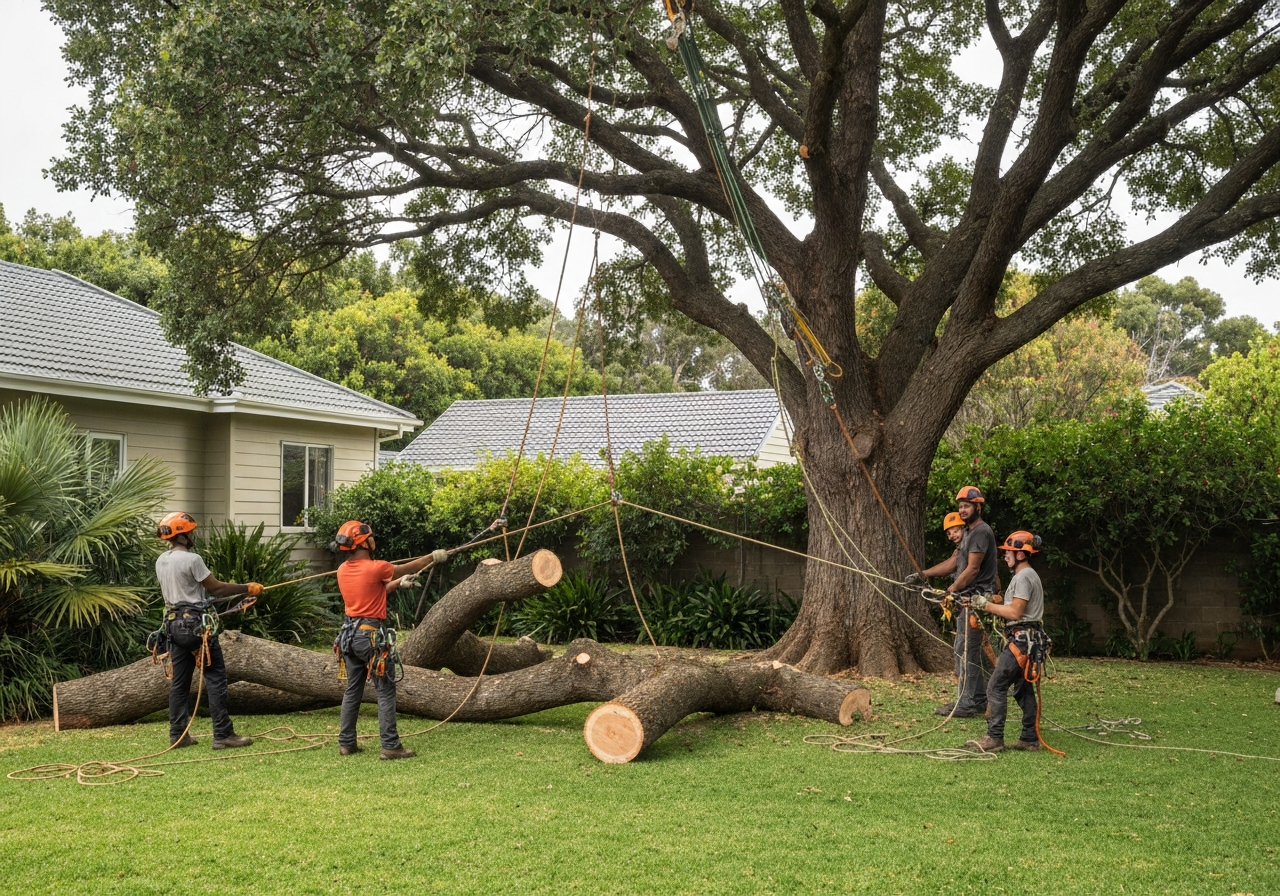
The method used to lower branches and sections of trunk affects how easily the material can be sorted later. Rigging, where a trained arborist uses ropes and friction devices to lower heavy limbs in a controlled way, keeps the wood intact and avoids shattering. Shattered wood is harder to process through a chipper and more likely to be rejected by a firewood buyer. Thoughtful rigging, combined with a metal detector check before cutting, preserves the value of the timber and makes the whole disposal chain smoother.
On tight urban sites, rigging may be the only safe way to get branches down without damaging the house or neighbouring properties. It takes longer than free-felling, but it protects the material quality and reduces the chance of injury. That is a real-world trade-off that professional arborists deal with every day.
Eco-friendly tree disposal is not complicated, but it does require a shift in mindset. Instead of seeing the felled tree as rubbish, you see it as a bundle of resources waiting to be directed to their best use. Firewood, woodchip, mulch, compost, biomass fuel, and even habitat piles all keep carbon and nutrients cycling instead of burying them in a hole. The next time you need a tree removed, ask your arborist how they plan to handle the waste. A good one will have answers that go beyond the skip.